
Blog
Why Maritime Injury Cases Require Knowledge of Federal Laws
The Tadda Law Firm · July 25, 2026 · 5 min read
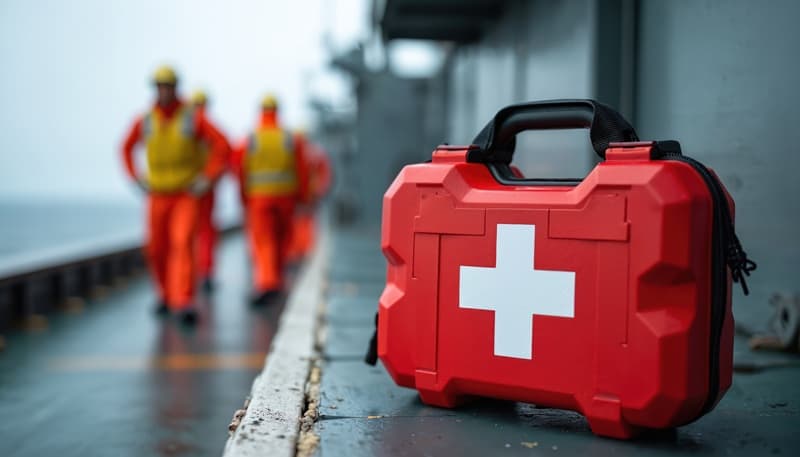
Louisiana has a long relationship with the water. Rivers, ports, offshore platforms, tugboats, barges, cargo ships, fishing vessels. You don’t have to drive very far before running into someone whose job somehow involves all of the above. That also means maritime injuries are a reality for a lot of hardworking people.
One thing I’ve learned over the years is that many people assume an injury on the water works just like any other workplace accident.
It would certainly make life simpler if that were true.
Questions about your own situation? Call or text (225) 756-0007. The consultation is free and it is with an attorney.
Unfortunately, maritime law likes to do things its own way.
Instead of following one straightforward set of rules, maritime injury cases often involve an entirely different collection of federal laws, legal doctrines, and decades of court decisions that have been developing since ships relied on sails instead of diesel engines. It’s fascinating history if someone enjoys reading legal opinions from the nineteenth century. Most people don’t, and honestly, I can’t blame them.
The important thing is understanding that maritime cases are different from ordinary injury cases, and those differences matter.
One of the first questions that usually has to be answered isn’t necessarily what happened.
It’s where it happened.
That may sound like a simple question, but it often opens the door to a surprisingly complicated conversation. An accident occurring aboard a vessel in navigable waters may involve one set of laws, while an injury at a dock, shipyard, terminal, or offshore facility may involve another. Sometimes the exact location becomes one of the biggest issues in the entire case.
Then comes another question that sounds simple but rarely is.
What exactly was the injured person doing for a living?
Job titles can be misleading.
Someone called a mechanic might spend nearly every working day aboard vessels. Another mechanic may rarely set foot on one. Two employees with the same title can have completely different legal rights because their day-to-day responsibilities are different.
Maritime law doesn’t hand out labels based on business cards.
It looks at the work itself.
That’s particularly important when determining whether someone qualifies as a seaman under the Jones Act. Contrary to what plenty of people assume, simply working around boats doesn’t automatically make someone a seaman. The law looks at the employee’s connection to a vessel and whether that connection is substantial enough to qualify for protection under federal law.
It’s a bit like gumbo. Everybody agrees gumbo exists, but ask ten people exactly what belongs in it and suddenly everyone has very strong opinions.
Maritime law occasionally feels the same way.
Then there’s the Longshore and Harbor Workers’ Compensation Act, which covers many employees who work around ports, docks, shipyards, terminals, and loading facilities.
Notice I said “many.”
Not everyone.
Coverage depends on factors that include both where the work takes place and what kind of work is actually being performed. Those details matter far more than most people realize.
That’s one reason maritime cases almost never fit neatly into one box.
Several different companies may also be involved.
The vessel owner might not employ the injured worker. The employer might not own the vessel.
Another contractor may have maintained the equipment.
Someone else may have loaded the cargo.
By the time everyone involved is identified, the organizational chart can start looking more like a family tree than a workplace diagram.
Sorting through those relationships takes time because responsibility isn’t always as obvious as it first appears.
Evidence also becomes especially important in maritime cases.
Unlike a building that stays in one place, vessels have an annoying tendency to leave.
A tugboat involved in an accident today may be hundreds of miles away next week.
- Equipment gets repaired.
- Crews rotate.
- Cargo gets unloaded.
- Weather changes.
The scene that existed immediately after the accident can disappear surprisingly quickly.
That’s why documentation becomes incredibly valuable.
- Photographs.
- Maintenance records.
- Witness statements.
- Inspection reports.
- Medical records.
- Employment records.
All of those pieces help recreate what actually happened long after the vessel has moved on.
Medical treatment presents its own unique issues as well.
Maritime injuries range from slips and falls to heavy equipment accidents, crushing injuries, burns, repetitive stress injuries, offshore explosions, machinery failures, and everything in between.
Some injuries are immediately obvious. Others develop gradually.
Back injuries, shoulder problems, hearing loss, and cumulative trauma may not become fully apparent until long after the original incident.
Establishing how those injuries relate to a person’s work often requires careful review of both medical and employment history.
Timing also matters.
Federal laws come with filing deadlines. Different claims may have different procedural requirements.
Waiting too long can complicate matters in ways that have nothing to do with whether an injury actually occurred.
People are often surprised to learn that maritime law has developed over centuries.
Modern vessels may use sophisticated navigation systems and advanced engineering, but many legal principles governing maritime commerce have surprisingly deep historical roots. Courts have continued refining those principles over time, creating an area of law that is both highly specialized and constantly evolving.
It’s one of the reasons maritime law has earned a reputation for being complicated.
That reputation is well deserved. Fortunately, complicated doesn’t mean impossible to understand.
At its core, every maritime injury case starts with a handful of practical questions. Where did the accident happen? What type of work was being performed? Was a vessel involved? Who owned it? Who employed the injured worker? Which federal laws apply?
Those answers create the roadmap for everything that follows.
Living and working in Louisiana means maritime commerce will always be an important part of everyday life. Thousands of people make their living on rivers, offshore platforms, ports, and vessels that keep goods moving across the country and around the world.
Most days, those jobs end exactly as planned, with everyone heading home safely.
When an injury does happen, however, the legal questions can become far more complex than many people expect. Maritime law isn’t simply ordinary injury law with a little extra water around it. It’s an entirely different legal framework, built specifically for the unique challenges that come with working on and around navigable waters. Understanding those differences is often the first step toward understanding the case itself. Fortunately, understanding maritime law doesn’t require becoming a sailor first.
Related practice area: Maritime personal injury
This article is general information about Louisiana law and is not legal advice about your situation. If you want an answer about your own case, the consultation is free and it is with an attorney.
Call or text (225) 756-0007


Free consultation
Start with a conversation with an attorney.
Free same-day consultations, Monday through Friday. Tell us what happened and we will tell you honestly whether there is a claim worth pursuing and what the next step looks like.
You will speak with an attorney, not a case worker.