
Baton Rouge, Louisiana
Truck accident lawyer in Baton Rouge
A crash with an 18-wheeler or a commercial truck is not a bigger car accident. It brings a company, federal safety records, and a much larger insurance policy into the case. The first conversation is free, and it is with an attorney.
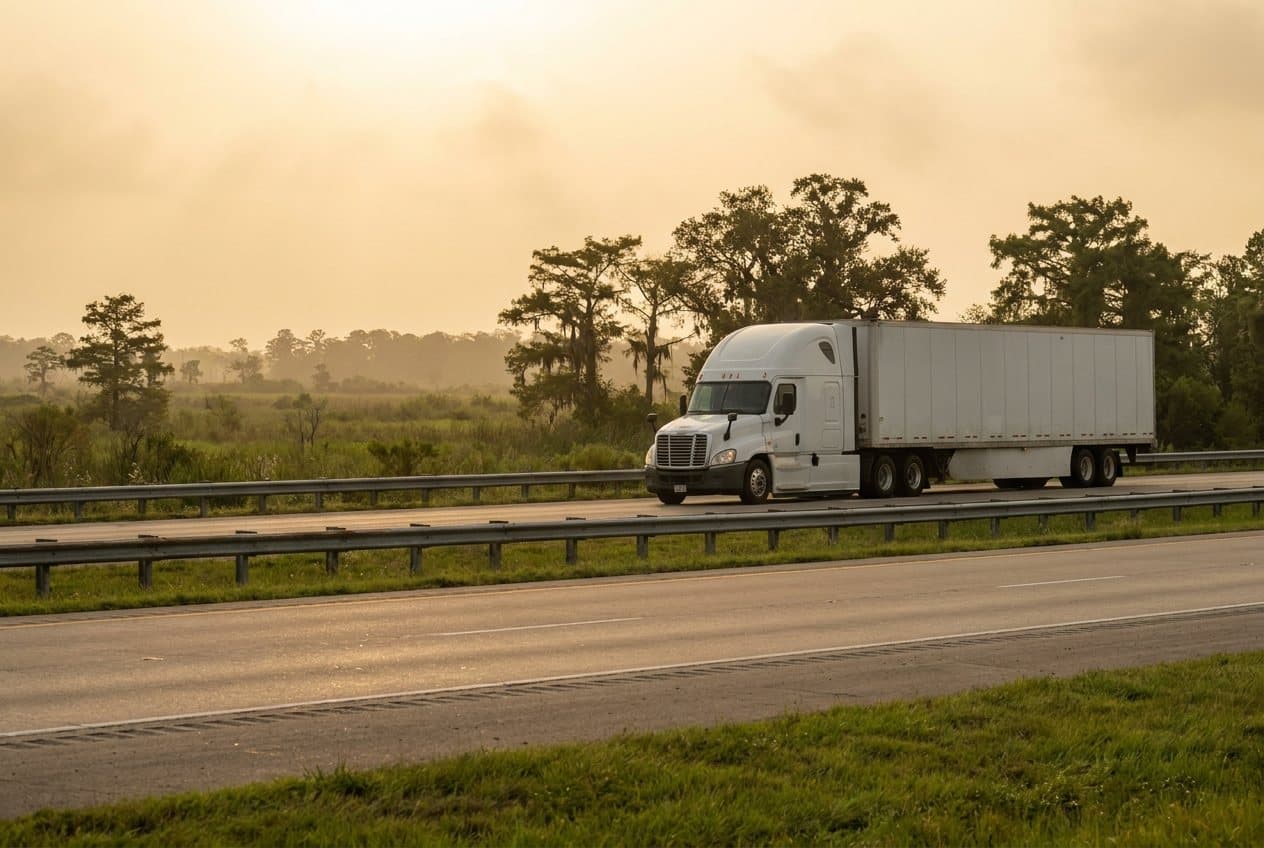
The Tadda Law Firm represents people hurt in collisions with 18 wheelers, semi trucks, and other commercial vehicles in Baton Rouge and the parishes east of it. Motor vehicle claims are roughly seven in ten of the firm’s matters, and the office sits on O'Neal Lane near I-12, on the east side of the city.
Why a truck accident case is different
In an ordinary collision the questions are about two drivers and two policies. A commercial truck is usually operating as part of a business, so the investigation reaches past the driver to the company behind the truck. The firm’s own writing on this puts it plainly: these cases involve asking more questions rather than making more assumptions.
The questions start with who is actually responsible for the vehicle and the load.
- Who owns the truck, and who owns the trailer?
- Who employs the driver, and was the truck leased?
- Who maintained the truck, and who inspected it?
- Who loaded and secured the cargo?
The insurance is usually larger, and there may be more than one policy
Coverage is where truck cases most often differ from car cases, and it is the first thing the firm works out. Erik Tadda’s own read is that if the other vehicle was a commercial truck, there is probably enough coverage, which is rarely true of a minimum-limits personal auto policy.
Federal rules set a floor. A for-hire carrier hauling ordinary freight in interstate commerce in a vehicle rated at 10,001 pounds or more must carry at least $750,000 in public liability coverage. Carriers of oil and many hazardous materials must carry $1,000,000, and certain bulk hazardous loads $5,000,000. Those figures come from 49 CFR 387.9. They are minimums, and many carriers carry more.
Where the driver, the truck owner, and the company that hired the load are different parties, there can be layers of coverage rather than one policy. Finding every one of them is ordinary work here, and it is the part of the case that decides whether a serious injury can be fully compensated.
The federal records behind every truck
Interstate trucking runs on paperwork the federal government requires, and that paperwork is often the best evidence of what happened. Drivers are limited in how long they can work. Under 49 CFR 395.3, a property-carrying driver may drive 11 hours within a 14 hour window that starts only after 10 consecutive hours off duty, and needs a 30 minute break after 8 hours of driving.
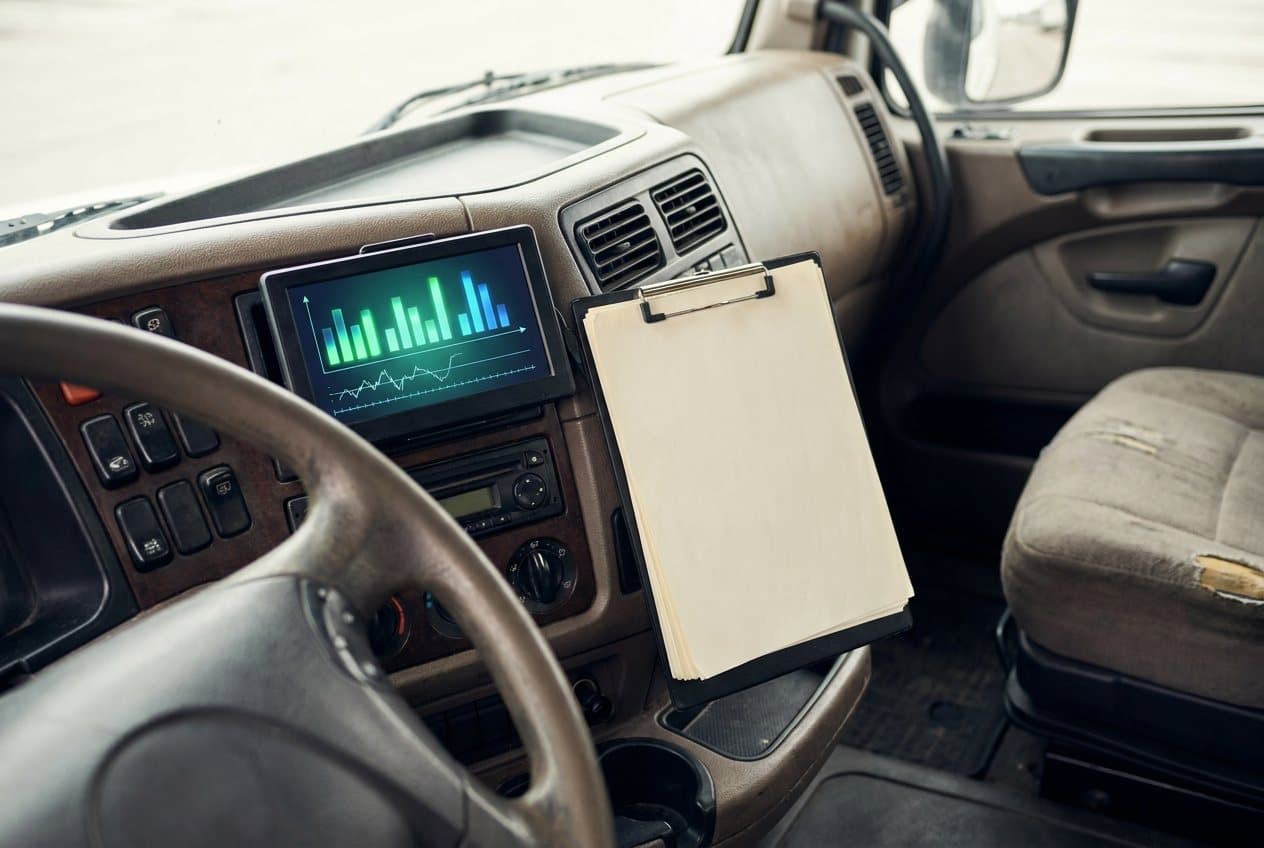
Most carriers must record that time on an electronic logging device. Many trucks also carry onboard computers that record speed, braking, engine data, and GPS location, which can explain the seconds before a crash better than any witness can.
Some of that evidence has a short shelf life
The records exist, but the rules only require a carrier to keep some of them for months. The table below shows the minimum retention periods for three of the most important ones. Video from nearby businesses usually loops over within days, trucks get repaired, and memories fade, which is why the practical advice after a truck crash is to call early rather than wait to see how the injury develops.
| Record | What it can show | Minimum retention |
|---|---|---|
| Hours of service records | Driving and on-duty time, including electronic logging device data | 6 months (49 CFR 395.8(k)) |
| Inspection, repair, and maintenance records | What was inspected or repaired on the truck, and when | 1 year, and 6 months after the truck leaves the carrier’s control (49 CFR 396.3(c)) |
| Driver qualification file | The driver’s application, driving record, road test, and medical certificate | The length of employment plus 3 years (49 CFR 391.51(c)) |
Federal minimums for motor carriers subject to these rules. A carrier may keep records longer, but it is not required to.
18 wheelers, semi trucks, and every other commercial vehicle
Not every commercial vehicle case involves an 18 wheeler. Delivery vans, bucket trucks, utility vehicles, garbage trucks, log trucks, tow trucks, buses, and company pickups all operate as part of a business, and each raises its own version of the same questions about who was responsible for the vehicle and the driver.
A driver injured while working, in their own truck or a company vehicle, may have both a workers’ compensation claim and a separate claim against the other driver. That second claim is one of the first things the firm looks for, because it is easy to miss when the first is already underway.
How fault is decided, and what changed in 2026
Louisiana divides fault by percentage. Under Civil Code article 2323 as amended by Acts 2025, No. 15, effective January 1, 2026, a person found 51 percent or more at fault for their own injuries recovers nothing, and a person found less than 51 percent at fault has their damages reduced by their share.
That change makes the early evidence matter even more. A trucking company’s first account of a crash is rarely the full one, and the driver logs, the maintenance history, and the onboard data are how that account gets tested. If your accident happened before 2026, ask which rule applies to it rather than assuming.
Deadlines
Louisiana Civil Code article 3493.1 sets a two year prescriptive period for delictual actions, running from the day the injury is sustained. That was extended from one year effective July 1, 2024. Evidence in a truck case disappears long before that deadline arrives, so the two years is the outside limit, not the plan.
What a Baton Rouge truck accident lawyer does, and who does it
Identify every party and every policy, request the records that matter before they are gone, and follow the medical treatment, because a claim is proved on the medical record and the record has to be right as it is made. Where the injuries are serious, the firm brings in the specialists who establish what the future costs, as described on the serious injuries page.
There are four attorneys and no case managers working files in place of a lawyer. The attorney who meets you is the one who reads the records and speaks to the adjuster. Where a crash takes a life, the family’s claims are explained on the wrongful death and survival page.
Related: car accident lawyer in Baton Rouge.
Your attorney
The attorneys who handle truck accident claims.
Erik Tadda lists truck accidents among his practice areas and has practiced in Louisiana since 1991; Rick Tadda lists motor vehicle accidents. The attorney who meets you reads the records and talks to the adjuster.


Client reviews
What motor vehicle clients say
Real Google reviews from the firm’s motor vehicle clients, shown as posted. None of the reviews on file describes a truck case, so none is presented as one.
Past results do not guarantee or predict a similar outcome in any future case.
How much insurance does a trucking company have to carry?
It depends on what the truck hauls. Under federal rule 49 CFR 387.9, a for-hire carrier hauling ordinary freight in interstate commerce in a vehicle rated at 10,001 pounds or more must carry at least $750,000 in public liability coverage. Carriers of oil and many hazardous materials must carry $1,000,000, and some bulk hazardous loads $5,000,000. Those are minimums. Many carriers carry more, and there can be more than one policy.
Who can be responsible for a truck accident besides the driver?
Often the company that employs the driver, the owner of the truck or trailer if that is someone else, the company that maintained it, and sometimes whoever loaded the cargo. Which of them applies depends on how the operation was set up, which is why the investigation starts with ownership, employment, leases, and maintenance rather than just the crash itself.
How long does a trucking company keep driver logs?
Federal rule 49 CFR 395.8(k) requires a motor carrier to keep hours of service records and supporting documents for at least six months. Maintenance records must be kept for a year and for six months after the truck leaves the carrier’s control. A company may keep them longer, but it is not required to, which is the practical reason to ask early.
What if I was partly at fault for the crash?
For accidents on or after January 1, 2026, Louisiana Civil Code article 2323 bars recovery if you are found 51 percent or more at fault, and reduces your damages by your share if you are found less than 51 percent at fault. If your accident happened before 2026, ask which rule applies rather than assuming. Fault in a truck case is often less clear than the first account suggests.
How long do I have to file a truck accident claim in Louisiana?
Louisiana Civil Code article 3493.1 sets a two year prescriptive period for delictual actions, running from the day the injury is sustained. Other deadlines can apply depending on who is involved, and the evidence in a truck case can disappear in months, so it is worth asking early rather than working to the outside limit.
Sources
Where these rules come from
The law cited on this page, at its primary source. General information, not advice about a particular case.
- 49 CFR 387.9, minimum levels of financial responsibility
The minimum liability coverage for commercial carriers.
- 49 CFR 395.3, maximum driving time
The 11 hour, 14 hour, and 30 minute break rules for property-carrying drivers.
- Louisiana Civil Code article 2323, comparative fault
The 51 percent rule, effective January 1, 2026.
- Louisiana Civil Code article 3493.1, prescription
The two year deadline for injury claims.
Free consultation
Start with a conversation with an attorney.
Free same-day consultations, Monday through Friday. Tell us what happened and we will tell you honestly whether there is a claim worth pursuing and what the next step looks like.
You will speak with an attorney, not a case worker.