
Blog
Why Commercial Vehicle Accidents Are a Different Animal Than Ordinary Car Accidents
The Tadda Law Firm · August 7, 2026 · 4 min read
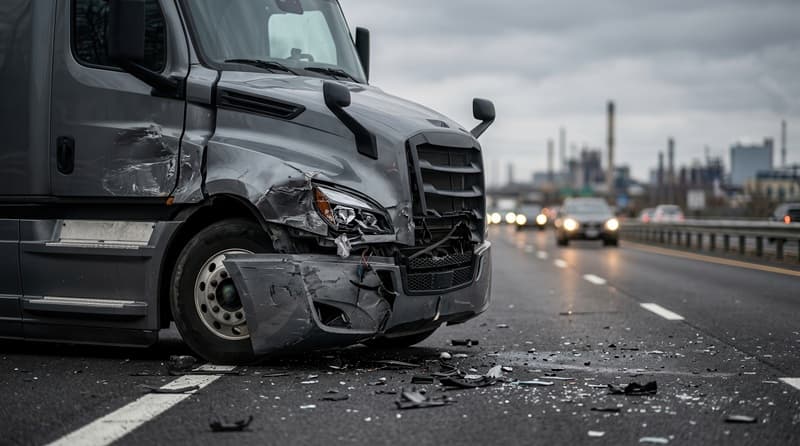
Most people think of a vehicle accident as two cars meeting in a place where neither one wanted to be. Fender benders happen. Traffic slows down. Insurance information gets exchanged. Hopefully, everyone walks away safely, and life eventually gets back to normal.
Commercial vehicle accidents are often a very different story.
After years of handling injury cases, I’ve found that many people assume a crash involving an 18-wheeler, delivery truck, utility vehicle, or commercial van follows the same process as a collision between two passenger cars.
It usually doesn’t.
Questions about your own situation? Call or text (225) 756-0007. The consultation is free and it is with an attorney.
In fact, commercial vehicle cases often resemble putting together a thousand-piece puzzle where someone forgot to include the picture on the box.
One of the biggest differences is simply size.
Physics has never been particularly interested in fairness.
A passenger car weighing a few thousand pounds and a fully loaded commercial truck weighing several times that amount do not behave the same during a collision. Larger vehicles require longer stopping distances, wider turning areas, and more room to react to changing traffic conditions.
When those factors come together during an accident, the resulting damage can be significantly different than what occurs in an ordinary passenger vehicle crash.
Another difference is that commercial vehicles are often operating as part of a business.
That means the investigation frequently extends far beyond the driver.
Questions begin to surface.
- Who owns the vehicle?
- Who employs the driver?
- Who maintained the truck?
- Who loaded the cargo?
- Was the vehicle leased?
- Was another company responsible for inspections?
Suddenly, what looked like a straightforward accident becomes much more complex.
Maintenance is another major factor.
Every vehicle requires regular maintenance, but commercial vehicles spend far more time on the road than the average family SUV.
- Brakes wear.
- Tires age.
Suspension components experience stress.
- Lights need replacement.
- Mechanical systems require inspection.
Maintenance records often become an important part of understanding whether equipment issues may have contributed to an accident.
Driver qualifications also receive careful attention.
Many commercial drivers must meet licensing requirements beyond those required for ordinary passenger vehicles. Depending on the type of commercial operation, regulations may involve medical certifications, specialized training, hours-of-service limitations, inspections, and continuing compliance with both state and federal requirements.
Those records sometimes become important pieces of the overall investigation.
One area people rarely think about is electronic data.
Modern commercial vehicles are incredibly sophisticated.
Many contain onboard computers capable of recording information about speed, braking, engine performance, hours of operation, GPS location, and other operating conditions.
Instead of relying solely on witness recollections, investigators may have access to objective electronic information that helps explain what occurred before and during the collision.
That’s a significant difference from many ordinary passenger vehicle accidents.
Cargo also deserves attention.
Commercial trucks don’t simply carry cargo. They carry cargo that must often be loaded, balanced, secured, and transported according to established safety standards.
Improperly secured cargo can shift. Overloaded trailers may handle differently.
Uneven weight distribution can affect braking, steering, and stability.
In certain situations, those factors become important parts of determining how an accident occurred.
Another difference involves the number of people participating in the investigation.
Passenger vehicle accidents may involve drivers, witnesses, insurance adjusters, and law enforcement.
Commercial vehicle accidents often add accident reconstruction specialists, engineers, maintenance experts, transportation professionals, safety consultants, and additional investigators into the process.
The amount of documentation can become substantial.
- Inspection reports.
- Maintenance logs.
- Driver qualification files.
- Electronic logging device records.
- Dispatch information.
- GPS data.
- Repair histories.
- Training documentation.
- Vehicle inspection reports.
Each piece contributes to a better understanding of the circumstances surrounding the accident.
Insurance is another area where commercial cases frequently differ.
Commercial transportation companies often carry insurance policies that differ considerably from those associated with privately owned passenger vehicles. Depending on how the business is structured, multiple insurance policies may potentially apply to different aspects of the case.
Sorting through those relationships often requires a detailed review of contracts, ownership records, and operational responsibilities.
Timing also matters.
- Evidence has a shelf life.
- Electronic information may eventually be overwritten.
- Surveillance video may disappear.
- Vehicle conditions change after repairs.
- Roadway conditions evolve.
- Witness memories naturally fade.
That’s one reason commercial vehicle investigations often begin as quickly as possible following an accident.
Another misconception is that every commercial vehicle accident involves an 18-wheeler.
Commercial vehicles come in many forms.
- Delivery vans.
- Bucket trucks.
- Utility vehicles.
- Construction equipment.
- Garbage trucks.
- Tow trucks.
- Transit buses.
- Company pickup trucks.
Each presents its own unique operational considerations depending on the circumstances.
Commercial transportation itself plays an incredibly important role in everyday life.
Groceries don’t magically appear on store shelves.Construction materials don’t teleport to job sites.
Medical supplies don’t deliver themselves.
Commercial drivers safely travel millions of miles every year helping keep businesses, hospitals, schools, and communities operating.
Fortunately, the overwhelming majority of those trips end exactly as planned.
When accidents do occur, however, the investigation often requires looking far beyond the point of impact.
One thing I often tell people is that commercial vehicle cases involve asking more questions rather than making more assumptions.
The collision is only the beginning of the investigation.
Understanding everything that happened before the accident often proves just as important as understanding what happened during it.
At the end of the day, every accident deserves careful attention to the facts.
Commercial vehicle accidents simply tend to involve more facts, more documentation, more regulations, and more moving parts than the average passenger vehicle collision.
The goal is never to make the case more complicated than necessary.
The goal is making sure every relevant piece of the story is identified, examined, and understood. That’s how informed decisions are made, and that’s why commercial vehicle accidents are often very different from what most people expect.
Related practice area: Truck accident lawyer in Baton Rouge
This article is general information about Louisiana law and is not legal advice about your situation. If you want an answer about your own case, the consultation is free and it is with an attorney.
Call or text (225) 756-0007


Free consultation
Start with a conversation with an attorney.
Free same-day consultations, Monday through Friday. Tell us what happened and we will tell you honestly whether there is a claim worth pursuing and what the next step looks like.
You will speak with an attorney, not a case worker.