
Baton Rouge, Louisiana
Car accident lawyer in Baton Rouge
A collision turns a normal week into insurance calls, missed work, and questions nobody prepared you for. The first job is to understand what happened and what coverage exists. That conversation is free, and it is with an attorney.
5.0 stars from 311 Google reviews. You speak with an attorney, not a case worker.
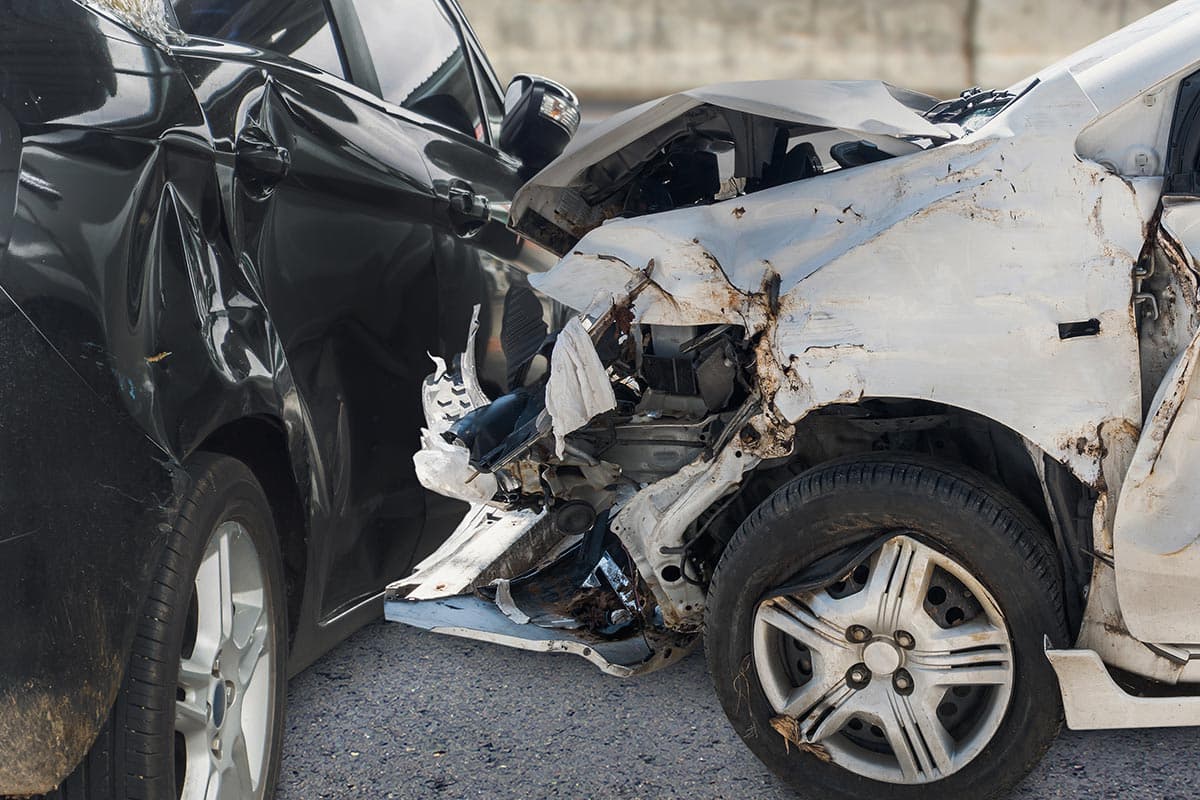
The Tadda Law Firm’s car accident lawyers in Baton Rouge represent people hurt in collisions across the city and the parishes east of it. Every client works directly with a Baton Rouge car accident attorney, not a case manager. Motor vehicle claims are roughly seven in ten of the firm’s matters, which is another way of saying this is the work the office does most days.
What to do after a crash in Baton Rouge
Most of what matters in the first week is documentation. The Louisiana State Police crash report is the single most useful early document when one exists, though it is often not available for one to two weeks. In the meantime the facts have to come from the people who were there.
- Get checked out, and be complete about it. More on that below.
- Photograph the vehicles, the scene, and anything that explains how it happened.
- Note whether there were witnesses, and whether a nearby business has a camera. Footage loops over and is usually gone within days. A business will often show footage to a customer or an officer even when it will not hand a copy to a lawyer.
- Do not give a recorded statement to the other carrier first.
On the emergency room question, the honest answer is that it depends on the injury rather than on the claim. If you are bleeding, if bones are broken, or if you hit your head, go. Otherwise an urgent care visit or a next-day appointment with a physician is usually both better medicine and a better use of limited coverage, because a single emergency room visit can consume most of a minimum-limits policy and still end with advice to see your own doctor.
How long do you have to file a car accident claim in Louisiana?
Two years from the day the injury is sustained. Louisiana Civil Code article 3493.1 sets a two year prescriptive period for delictual actions. This is worth stating carefully, because it changed recently. Louisiana ran a one year period for generations, and Acts 2024 No. 423 extended it to two years effective July 1, 2024, applied going forward.
A good deal of published material, including pages from other Baton Rouge firms, still says one year. Deadlines can also vary with the type of claim and the identity of the defendant, so treat any general rule as a reason to ask rather than a reason to wait.
Finding every insurance policy that could pay
This is where cases are quietly won and lost, and it is the part most people never think about. A claim is limited by the coverage that exists, so the early work is identifying all of it.
A meaningful share of Louisiana drivers carry no liability insurance at all, and many who do carry minimum limits. When the at-fault driver has nothing, the claim often moves to your own uninsured and underinsured motorist coverage. That coverage applies when the other driver carried less than your damages, so a 15,000 dollar liability policy and 15,000 dollars of your own UM coverage can mean up to 30,000 dollars available rather than 15,000.
What Louisiana does not allow is stacking. Under La. R.S. 22:1295, you generally cannot add together the UM limits on several vehicles or several of your own policies. The main exception is when you are hurt as a passenger in someone else’s car: that car’s UM coverage pays first, and one UM policy of your own can then pay as excess.
People hesitate to make a UM claim because it feels like penalizing their own insurer. Louisiana law addresses that directly: under La. R.S. 22:1284, an insurer may not raise your rate, add a surcharge, cancel, or refuse to renew your policy because of an accident in which you were not at fault. That is what the coverage is for.
Where the driver and the vehicle owner are different people, there may be layers of coverage rather than one policy, and a driver operating a vehicle for work can bring commercial coverage into play. Questions about policy interpretation can also be taken up with the Louisiana Department of Insurance.
Louisiana’s No Pay No Play rule
Louisiana has a provision commonly called No Pay No Play. In general terms, a driver who was operating without the required liability insurance gives up the first portion of what would otherwise be recoverable. The practical effect is that an uninsured driver who is hit by someone else can find a large part of a legitimate claim eliminated. It is one of the strongest arguments for carrying coverage, and it is a question worth asking about early rather than discovering late.
Your vehicle, the rental, and the storage clock
The property damage side is separate from the injury claim, and it moves first. People often want to route it through the at-fault driver’s carrier on principle, since the collision was not their doing. That instinct regularly costs them.
The other carrier generally will not authorize a repair or a rental until it has the crash report and has spoken to its own insured to confirm coverage. If the driver and the registered owner are different people, that confirmation takes longer still. Meanwhile the vehicle sits, and storage fees accrue daily.
Where you carry collision coverage, using it usually gets the car moving immediately. Your deductible comes back to you once the carriers settle between themselves. The worst case is being out a deductible for a few weeks; the alternative is often a month of storage charges on a car nobody has authorized anyone to touch.
If you were driving without insurance
Louisiana’s rule here is known as no pay, no play. Under La. R.S. 32:866, as amended by Acts 2025, No. 16, an owner or operator who fails to carry the required liability coverage cannot recover the first $100,000 of bodily injury or the first $100,000 of property damage from the other driver.
There are exceptions written into the statute: where the other driver is convicted of or pleads no contest to driving while intoxicated from the crash, caused it intentionally, fled the scene, or was committing a felony. A passenger generally keeps the right to claim unless they own the uninsured vehicle. The threshold was lower before the 2025 amendment, so for an older accident, ask which version applies.
Your car, the rental, and the deductible
Property damage usually moves faster than the injury claim, and it is where most people first meet the insurance process. The at-fault driver’s liability insurer is responsible for repairing your vehicle and providing a rental while it is repaired, but only once it decides who was at fault. In the firm’s experience that can take anywhere from one to ten days, depending on how quickly the insurer reaches its own driver and whether a police report is available.
Either way the process is the same. The vehicle is inspected, in person or by photographs, and an estimate is written. You can choose your own repair shop, and if the repair costs more than the estimate, the shop requests a supplement. The insurer provides a rental while the car is being repaired, usually through a claim number you take to the rental location.
How fault is decided
Some collisions answer the fault question themselves. A rear-end impact usually does. Others do not, and a disputed intersection case is genuinely hard, because both drivers tend to remember having the green light. Without a witness, a camera, or physical evidence, it can become one account against another, and a carrier will price that uncertainty into any offer.
Louisiana divides responsibility by percentage, and the rule changed on January 1, 2026. Under Civil Code article 2323 as amended by Acts 2025, No. 15, a driver found 51 percent or more at fault for their own injuries recovers nothing, and a driver found less than 51 percent at fault has their damages reduced by their share. Before 2026 a driver could recover a reduced amount even when mostly at fault, so for an older crash, ask which rule applies.
That makes the early evidence matter more than it used to. The difference between 50 and 51 percent is the difference between a reduced recovery and none, and witnesses, cameras, and the physical evidence are what establish it, while they still exist.
The firm is candid about this at the outset. If a case cannot realistically produce a result worth having, saying so at the first meeting is better than discovering it after two years.
| Rule | What it means | Source |
|---|---|---|
| Deadline | Two years from the day the injury is sustained, for most injury claims | La. C.C. art. 3493.1 |
| Shared fault | 51 percent or more at fault bars recovery; below that, damages are reduced by your share | La. C.C. art. 2323 |
| No pay, no play | An uninsured owner or operator cannot recover the first $100,000 of bodily injury or property damage, with exceptions | La. R.S. 32:866 |
General rules. Exceptions and older versions can apply, which is a question for a conversation rather than a table.
Why the medical record decides the case
A claim is proved on the medical record, which means the record has to be right while it is being made rather than repaired afterward.
Three things matter more than people expect.
- Say everything at the first visit. People lead with the injury that hurts most and forget the rest. When the shoulder improves and the back turns out to be the real problem, an adjuster will note that the back was not mentioned until the third visit.
- Keep treatment consistent. Gaps and missed appointments are read as evidence that the injury resolved.
- Causation has to be stated in the record. A physician needs to connect the finding to the collision. Without that, a carrier can decline to pay and leave the question to litigation.
Erik Tadda reads the records himself rather than working from a summary, and the firm keeps an eye on the bills as they accumulate, because on a minimum-limits policy the medical expenses can quietly consume the recovery the client was supposed to receive.
What a car accident claim is worth
A claim has two parts. Special damages are the calculable losses: medical expenses, lost wages, the things three people would price the same way. General damages cover pain, suffering, and loss of enjoyment of life, and three experienced adjusters will value those three different ways.
That is why a firm number at the first call is a warning sign rather than confidence. The figure moves with every diagnosis and every procedure. The usual moment to evaluate is when treatment is complete or a physician records maximum medical improvement, meaning this is as good as it is going to get.
In larger cases the firm brings in the people who can prove future loss: vocational rehabilitation counselors to establish what work is still possible, life care planners to document what future treatment will cost, and economists to reduce those figures to present value.
No outcome is promised, and past results do not predict future ones. What can be promised is that the recommendation and the reasoning are explained, and the decision stays with you.
Fatal car accidents in Baton Rouge
When a collision is fatal, Louisiana law gives the family two separate claims. A survival action under Civil Code article 2315.1 carries forward the claim the person who died had, for what they suffered between the crash and their death. A wrongful death action under article 2315.2 compensates the family for their own loss.
Both belong first to the surviving spouse and children, then to the parents, then to brothers and sisters, then to grandparents. Both must be brought within one year from the death or two years from the day of the injury, whichever is longer. The coverage questions are the same as in any collision, including uninsured and underinsured motorist coverage. More detail is on the page for a wrongful death lawyer in Baton Rouge.
The vehicles are different and so are the claims
A rear-end collision between two passenger cars and a crash involving an eighteen wheeler are not the same case. A commercial vehicle brings a company policy, driver logs, maintenance records, and federal safety regulation into the picture, and the coverage available is usually far larger than a personal auto policy.
Motorcycle and pedestrian cases run the other way. The coverage is often ordinary, and the injuries are typically more severe, which makes finding every available policy the difference between a claim that works and one that does not.
Each has its own page: truck accident claims and motorcycle accident claims.
Car accidents across Baton Rouge and Port Allen
The office is on O’Neal Lane, on the east side of the city, but the car accident work covers all of Baton Rouge: crashes on I-10 and I-110 through the middle of the city, on US 61 and US 190, and across the river in Port Allen along I-10, LA 1, and LA 76. The consultation is free wherever the crash happened. Local detail is on the pages for injury lawyers for all of Baton Rouge and for a Port Allen personal injury lawyer.
Choosing a Baton Rouge car accident lawyer who handles your case personally
At larger firms, a client is often signed by one person, managed by another, and passed to a third if the case is filed. The lawyer whose face is on the billboard may never touch the file.
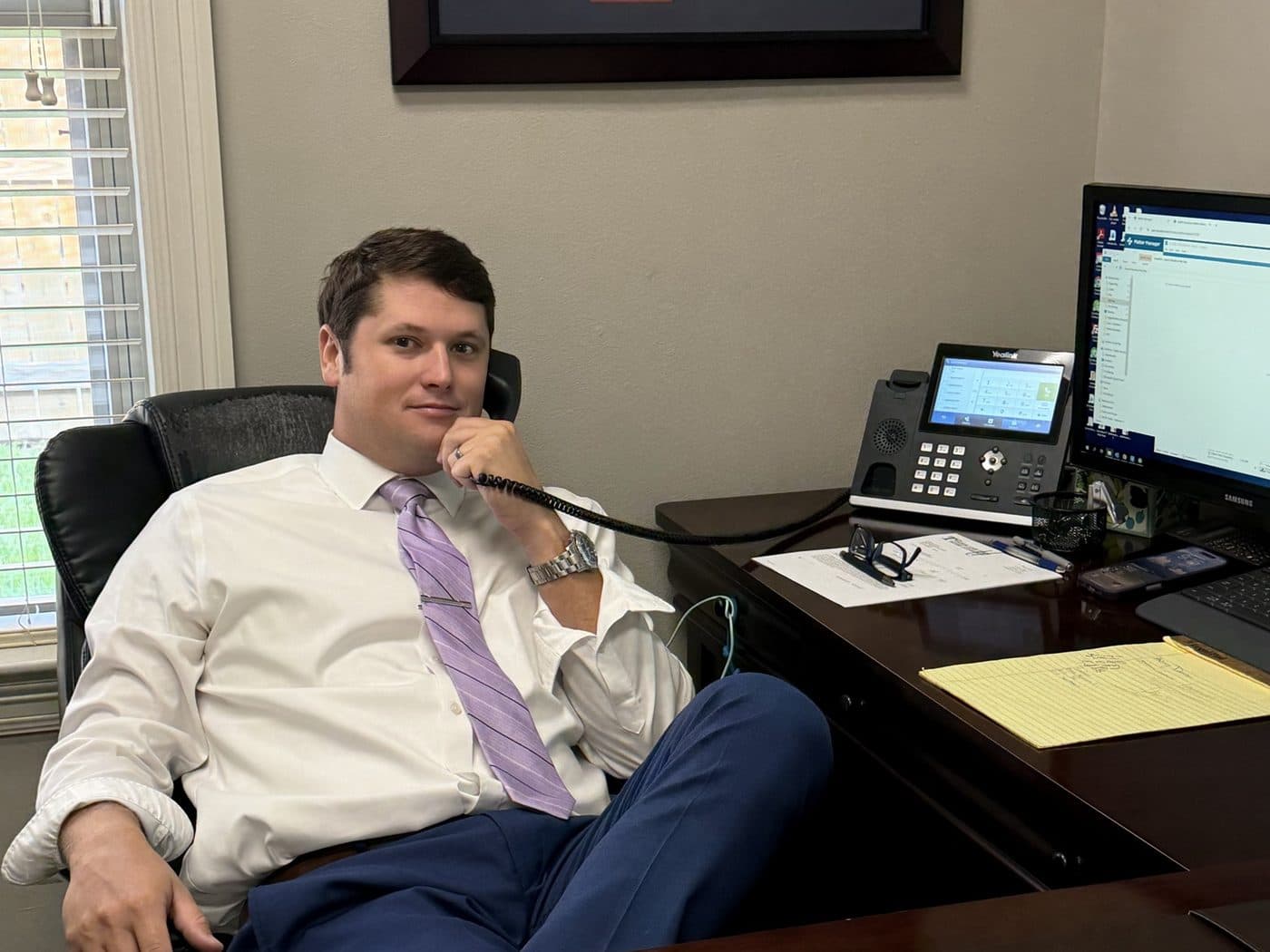
This office is deliberately smaller. Erik M. Tadda has been licensed in Louisiana since 1991 and works with his son Rick Tadda, along with Sarah Tormey and Jeremy Hader, both of whom joined during law school and stayed. Consultations are one on one with at least one attorney, and the attorney who meets you is the one who speaks to the adjuster, because negotiation is a conversation and there are things you can hear on a phone call that never appear in an email.
Related: truck accident claims when an 18 wheeler or commercial vehicle was involved, motorcycle accident claims, workers’ compensation when the collision happened on the job, wrongful death and survival claims, and the communities the firm serves east of Baton Rouge.
Client reviews
What clients say
Reviews posted by clients on Google. Past results do not guarantee or predict a similar outcome in any future case.
How long do I have to file a car accident claim in Louisiana?
Two years from the day the injury is sustained. Louisiana Civil Code article 3493.1 sets a two year prescriptive period for delictual actions. That is a change: the period was one year until Acts 2024 No. 423 extended it, effective July 1, 2024. Some published guidance still says one year. Deadlines can also differ depending on who the defendant is, so the safe course is to ask early rather than rely on a general rule.
What if the driver who hit me had no insurance?
You may still have a claim through your own uninsured or underinsured motorist coverage. Under La. R.S. 22:1295 it applies when the other driver has no insurance or carries less than your damages, so a 15,000 dollar policy on their side and 15,000 dollars of your own UM coverage can mean up to 30,000 dollars where the damages justify it. And under La. R.S. 22:1284, your insurer cannot raise your rate or cancel you over an accident you did not cause.
What if I was partly at fault for the car accident?
It depends on your share. For accidents on or after January 1, 2026, Louisiana Civil Code article 2323 bars recovery if you are found 51 percent or more at fault, and reduces your damages by your share if you are found less than 51 percent at fault. Before 2026 a reduced recovery was possible even at a higher share, so for an older crash, ask which rule applies.
Do I have to talk to the other driver’s insurance company?
No. Most people are not practiced at describing a collision, and a recorded statement given early can be used to narrow your claim later. Let the office handle that conversation. If you have already given a statement, that is not fatal and it happens often; tell the attorney what you said and the claim is worked from there.
Should I use my own insurance or theirs for the vehicle damage?
Often your own, even though it feels counterintuitive. The other carrier may not authorize anything until it has the crash report and has spoken to its own driver, which can take weeks while storage fees run. Your collision coverage can move immediately, and your deductible comes back to you once the carriers settle between themselves.
What is my car accident case worth?
Nobody can answer that honestly at the first call, and you should be cautious of anyone who does. A claim has two parts: special damages, which are the calculable losses like medical bills and lost wages, and general damages for pain and loss of enjoyment of life. The second part moves every time the medical picture changes. The value becomes clear as treatment progresses, not at the beginning.
Do I need a fatal car accident lawyer in Baton Rouge?
Not always, but a fatal crash raises questions an ordinary claim does not. Louisiana gives the family two separate claims, a survival action and a wrongful death action, each with its own order of who may bring it, and both carry a deadline of one year from the death or two years from the day of the injury, whichever is longer. The insurance questions are the same as in any collision, including uninsured and underinsured motorist coverage. The consultation is free and it is with an attorney, so the family can ask before deciding anything.
What happens after a fatal car accident in Louisiana?
The family has two separate claims. A survival action under Louisiana Civil Code article 2315.1 carries forward the claim the person who died had, and a wrongful death action under article 2315.2 compensates the family for their own loss. Both belong first to the surviving spouse and children, then parents, then brothers and sisters, then grandparents, and both must be brought within one year from the death or two years from the day of the injury, whichever is longer.
Can I recover if I did not have car insurance at the time of the accident?
Possibly, but less. Under La. R.S. 32:866, an uninsured owner or operator cannot recover the first $100,000 of bodily injury or the first $100,000 of property damage, unless an exception applies, such as the other driver being convicted of driving while intoxicated from the crash or fleeing the scene. A passenger who does not own the uninsured vehicle is generally not affected.
What if the police report says the crash was my fault?
A crash report is an important document but it is not the final word on fault. It records what the officer saw and was told, often after the fact. Witnesses, camera footage, and the physical evidence can tell a different story, and fault is ultimately divided by percentage under Louisiana law rather than assigned all or nothing.
What should I photograph after a car accident?
The vehicles, the scene, and anything that explains how it happened: skid marks, debris, traffic signals, and the positions of the cars before they are moved. Note any witnesses and whether a nearby business has a camera, because footage loops over and is usually gone within days.
Do you handle truck and motorcycle accidents as well as car accidents?
Yes. Commercial truck, motorcycle, bicycle, and pedestrian collisions are all part of the motor vehicle practice, and the attorney profiles list them individually. Truck and motorcycle claims each have their own page because the coverage and the evidence differ enough from an ordinary car claim to be worth explaining separately.
How soon should I call after a collision?
Early helps. Camera footage loops over within days, witnesses become harder to find, and treatment gaps at the start of a claim are difficult to explain later. The consultation is free, and calling early does not commit you to anything; it just means the evidence is still there if you need it.
Free consultation
Start with a conversation with an attorney.
Free same-day consultations, Monday through Friday. Tell us what happened and we will tell you honestly whether there is a claim worth pursuing and what the next step looks like.
You will speak with an attorney, not a case worker.