
Blog
What Accident Victims Should Know About Delayed Injury Symptoms
The Tadda Law Firm · June 5, 2026 · 4 min read
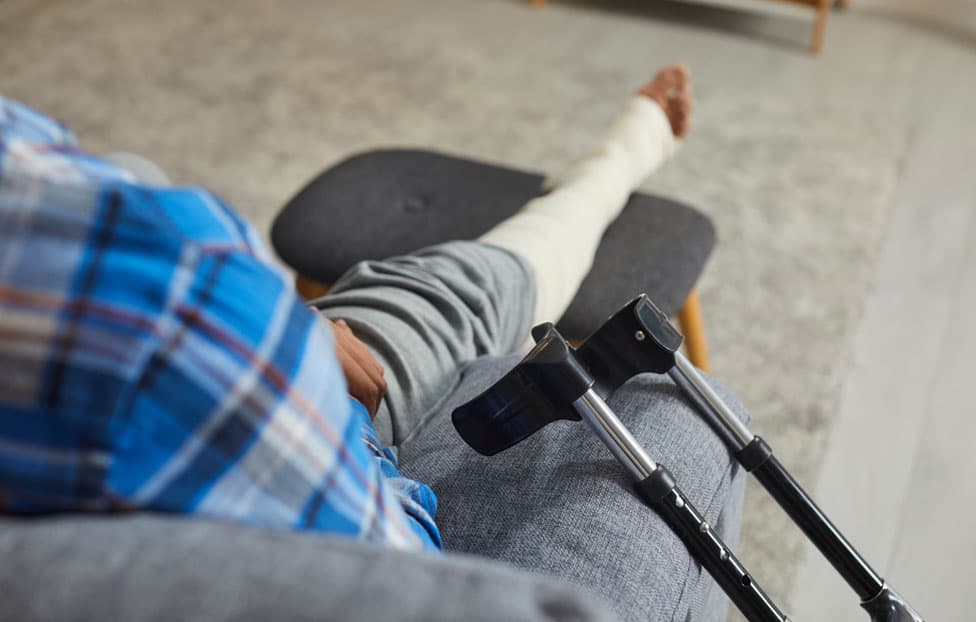
One of the most surprising things about accidents is that the body does not always send an immediate report.
A person can walk away from a car accident, exchange information, speak with police officers, call family members, arrange for a tow truck, and even stop for lunch on the way home.
Then two days later, that same person wakes up feeling like they spent the weekend competing in a professional wrestling tournament.
It happens more often than many people realize.
Questions about your own situation? Call or text (225) 756-0007. The consultation is free and it is with an attorney.
There is a common misconception that injuries always announce themselves immediately. Television and movies have not helped much in this department. On screen, a character gets injured and instantly grabs the exact body part that was hurt. Real life tends to be a little more complicated.
The human body has a remarkable ability to protect itself during stressful situations. After an accident, adrenaline begins flowing through the system. That adrenaline can temporarily mask pain and discomfort, making injuries less noticeable in the immediate aftermath.
At first, everything seems fine.
- Then the adrenaline fades.
- The body starts settling down.
- Inflammation begins.
- Muscles tighten.
And suddenly that reassuring statement of “I feel okay” becomes a lot less convincing.
Neck pain is one of the most common examples.
Many people involved in motor vehicle accidents report little or no discomfort immediately afterward. A day or two later, turning the head starts feeling like an engineering challenge.
Simple activities become surprisingly complicated.
Checking a blind spot while driving suddenly feels like a full-body workout. Looking over a shoulder requires strategic planning.
- The neck, apparently, has opinions.
- Back pain follows a similar pattern.
The spine, muscles, and surrounding tissues can absorb significant forces during an accident. Sometimes those effects are not obvious until inflammation develops and movement becomes more difficult. What seemed like minor soreness can evolve into a much larger issue.
Headaches deserve attention as well.
A headache after an accident might be related to stress, muscle tension, or something more significant. Because head injuries can present symptoms gradually, changes involving headaches, dizziness, concentration, or memory should never be casually dismissed.
The brain is an amazing organ. It is also not particularly fond of being rattled around. Another delayed symptom people often overlook is fatigue. After a traumatic event, the body works overtime. Muscles remain tense. Stress levels increase. Sleep may become disrupted As a result, unusual fatigue can appear even when no obvious injury is present.
People sometimes assume they are simply tired from dealing with the accident itself. That may be true. It may also be worth discussing with a healthcare provider.
One symptom category that often surprises people involves emotional changes.
An accident is not just a physical event. It can also be an emotional one.
- Anxiety while driving.‘Difficulty sleeping.
- Irritability.
- Trouble concentrating.
- Increased stress.
These reactions are not uncommon after traumatic experiences. Unfortunately, many people focus entirely on physical injuries and overlook the emotional side of recovery. Another mistake involves assuming that symptoms appearing days later cannot possibly be related to the accident.
That assumption is often incorrect. Many legitimate injuries take time to reveal themselves. Soft tissue injuries are especially famous for delayed symptoms. Unlike a broken arm, which tends to be fairly direct about its condition, soft tissue injuries can be subtle at first.
- They often develop gradually.
- The discomfort grows.
- Range of motion decreases.
- Daily activities become more difficult.
Only then does the true extent of the injury become apparent.
Documentation is important during this process.
Keeping track of symptoms, medical appointments, and changes in condition can be helpful. Memories fade surprisingly quickly, especially when dealing with medical treatment, insurance issues, vehicle repairs, work responsibilities, and everything else that tends to follow an accident.
The reality is that accident recovery rarely follows a perfectly predictable schedule.
- Every person is different.
- Every injury is different.
- Every accident is different.
- Some people recover quickly.
- Others require more time.
The key is paying attention to what the body is saying. Or, more accurately, what the body eventually decides to say. Because the body sometimes waits until several days after an accident to begin filing formal complaints. As an attorney, one of the most common conversations I have with accident victims begins with a variation of the same sentence: “I thought I was okay.” And many times, that belief was completely genuine.
The symptoms simply had not arrived yet. That is why medical evaluation, symptom monitoring, and attention to changing conditions remain important after an accident. Not because every accident results in serious injury. Because some injuries take time to introduce themselves. And unfortunately, they rarely have the courtesy to schedule an appointment before showing up.
Instead, they tend to appear unexpectedly, usually on a morning when someone is already running late and trying to convince a sore neck, aching back, and stubborn headache to cooperate.
In my experience, that strategy almost never works.
Related practice area: Car accident lawyer in Baton Rouge
This article is general information about Louisiana law and is not legal advice about your situation. If you want an answer about your own case, the consultation is free and it is with an attorney.
Call or text (225) 756-0007


Free consultation
Start with a conversation with an attorney.
Free same-day consultations, Monday through Friday. Tell us what happened and we will tell you honestly whether there is a claim worth pursuing and what the next step looks like.
You will speak with an attorney, not a case worker.